.jpg)
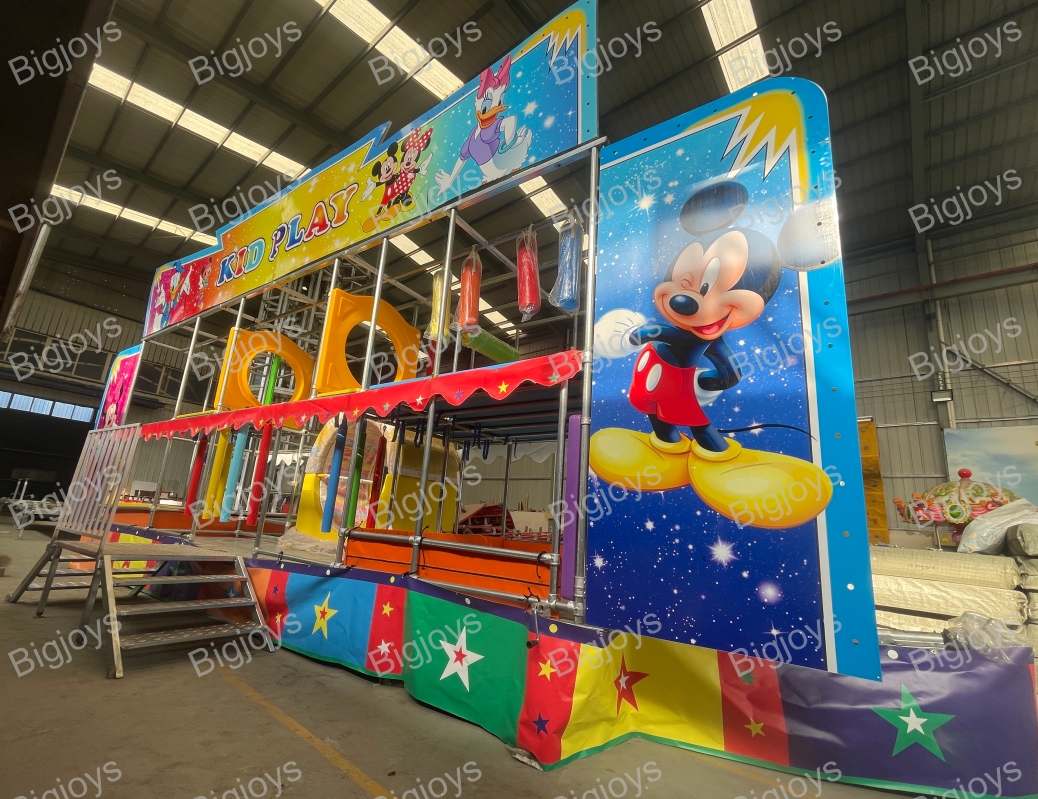
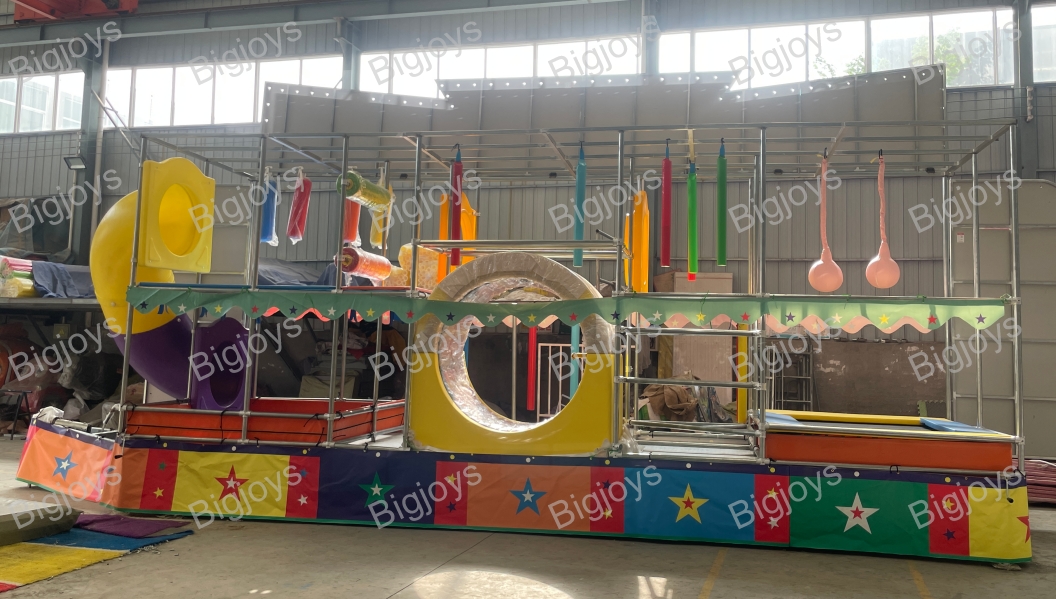
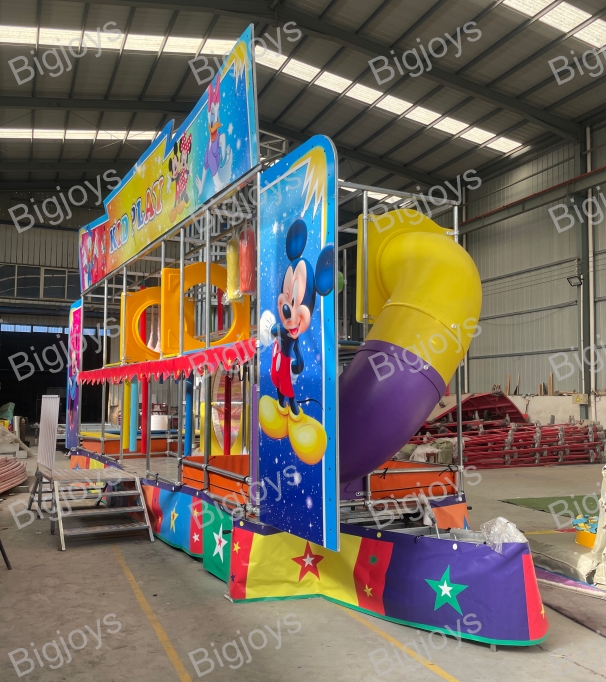
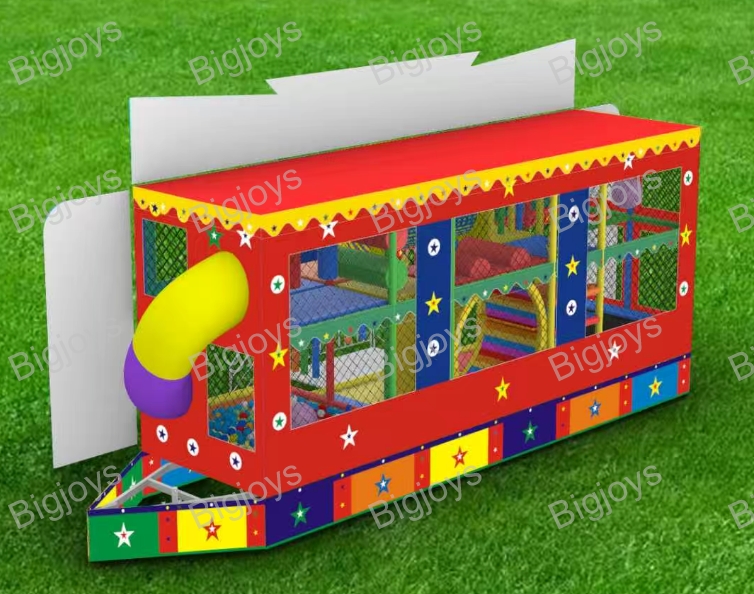
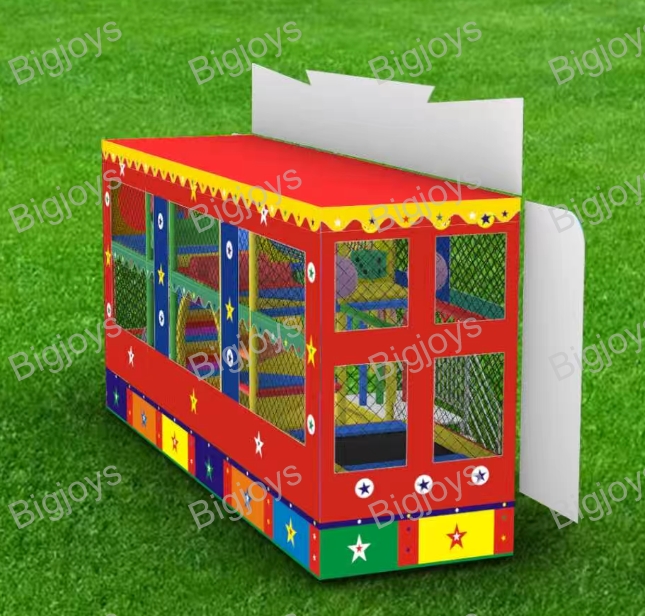
Test Objectives: The core objectives of this trailer playground-focused test are: 1) Systematically assess the structural stability, safety, and durability of trailer playgrounds under different transportation and usage conditions; 2) Evaluate the assembly, disassembly, and deployment efficiency of trailer playgrounds, especially when combined with portable playground components; 3) Verify the entertainment value and child-friendliness of amusement park-style trailer playgrounds (amusement park playground for kids) ; 4) Detect potential safety risks in trailer playground operations and propose targeted improvement measures to enhance overall performance.
Test Subjects and Preparation: To fully cover the characteristics of trailer playgrounds, three specialized test models were selected, all centered on trailer-mounted designs: ① A standard trailer playground (20-foot trailer integrated with classic play equipment: slides, swing sets, and climbing frames); ② A trailer playground with portable playground attachments (foldable ball pits, detachable balance beams, and lightweight slides that can be quickly assembled around the trailer); ③ An amusement park-style trailer playground (trailer-mounted mini Ferris wheel, small carousel, and interactive game stations, designed as an amusement park playground for kids). Before the test, all trailer playgrounds underwent rigorous pre-inspection: structural welds, towing connections, and brake systems were checked for integrity; safety accessories (anti-slip surfaces, safety mats, handrails, and emergency stop devices) were verified to comply with international playground safety standards (EN 1176). The test site was prepared with various ground conditions (concrete, lawn, and slightly uneven soil) to simulate real-world deployment scenarios.
Test Process and Results: The test was divided into three key phases: transportation performance testing, structural stability testing, and usage experience testing, all focused on the core characteristics of trailer playgrounds.
1. Transportation and Deployment Test of Standard Trailer Playground: The standard trailer playground was towed by a 1-ton pickup truck over a 50km test route, covering urban roads, rural dirt roads, and sections with continuous bumps. After transportation, a comprehensive inspection showed that all structural components remained intact—no loose bolts, deformation of play equipment, or damage to the trailer body was found. The deployment process was also tested: a 2-person team completed the setup (unfolding the trailer, fixing the support legs, and checking equipment connections) in 35 minutes, and disassembly and storage took 25 minutes, meeting the design requirements for quick deployment. Subsequent stability tests were conducted under simulated 8-level winds and on a 15° sloped surface. The trailer's anti-tip support legs and ground anchors effectively prevented tilting, and the integrated play equipment maintained stable connections with the trailer body. During the 7-day continuous usage test, 20 children used the playground daily, with no safety incidents (such as falls, pinches, or equipment malfunctions) reported. User feedback indicated that the space layout of the trailer playground was reasonable, providing sufficient play area while ensuring the compactness of the trailer during transportation.
2. Compatibility Test of Trailer Playground with Portable Playground Attachments: This test focused on evaluating how portable playground components integrate with the main trailer playground. The detachable portable playground attachments (foldable ball pits, balance beams, and lightweight slides) were assembled around the standard trailer playground. The assembly time for all attachments was 18 minutes, and they could be easily stored in the trailer's storage compartment after disassembly, without affecting the trailer's towing performance. The compatibility test showed that the connections between the portable components and the trailer playground were stable—during usage, the portable slides and ball pits did not shift or tip over even when 5-6 children used them simultaneously. The portable attachments significantly expanded the play functions of the trailer playground, making it more suitable for younger children (aged 3-5). The lightweight design of the portable components also reduced the overall transportation weight of the trailer playground, improving fuel efficiency during towing.
3. Performance Test of Amusement Park-Style Trailer Playground (Amusement Park Playground for Kids): This phase focused on the entertainment value and safety of the amusement park-style trailer playground, which is designed to bring an amusement park experience to mobile scenarios. The core equipment (mini Ferris wheel and small carousel) was operated continuously for 4 hours a day for 7 days, with no mechanical failures or operational abnormalities. The speed of the amusement equipment was set to 2 rounds per minute, which was suitable for children and received positive feedback from the test participants. The interactive game stations around the trailer also effectively attracted children's attention, with an average usage time of 45 minutes per child. Safety tests confirmed that the emergency stop devices of all amusement equipment responded within 0.5 seconds, and the safety belts and handrails provided reliable protection. Parent feedback indicated that the amusement park-style trailer playground solved the problem of limited access to amusement parks in remote areas, and the mobile design made it convenient to serve different communities.
Conclusion: The test results show that trailer playgrounds, including standard models, those combined with portable playground attachments, and amusement park-style models (amusement park playground for kids), generally perform well in terms of transportation stability, structural safety, deployment efficiency, and entertainment value. The standard trailer playground excels in balanced performance between mobility and basic play functions; the combination of trailer playground and portable playground attachments enhances functional diversity and adaptability to different age groups; the amusement park-style trailer playground successfully realizes the mobileization of amusement park experiences, improving the accessibility of high-quality recreational resources for children. All tested trailer playground models meet international safety standards, with no major safety hazards found during the test period, indicating that trailer playgrounds are a reliable mobile recreational solution for children.
Recommendations for Improvement: Based on the test results, the following targeted suggestions are proposed for trailer playground optimization: ① For standard trailer playgrounds, add a shock absorption system between the trailer body and play equipment to further reduce vibration during transportation and protect the equipment's service life; ② For trailer playgrounds with portable attachments, design a more integrated storage structure to simplify the assembly and disassembly process of portable components; ③ For amusement park-style trailer playgrounds, install retractable awnings or shaded areas to protect children from direct sunlight and rain, improving the comfort of usage. Future tests can focus on the long-term durability of trailer playgrounds under frequent transportation and usage conditions, as well as their adaptability to extreme weather (such as heavy rain and strong winds).




.jpg)